AI agentsAI agentsAgentic AIGovernance
Agentic teams break in ways a single agent does not
Adam Cowles2026-09-21T06:00:00.000Z5 min read
 Get started
Reason
AgentsQuoxMindAgentic TeamsMirrorQuoxLensRemember
QuoxMemoryBrain2CompoundingQuoxPlanCodebase MirrorAct
QuoxFlowQuoxEngineQuoxAgentQuoxChatAutonomyRun
EnterpriseOrganisationsPowers & ToolsmithQlusterQuoxBastionInterfaces
QuoxMCPQuoxCLIQuoxTerminalQuox ConsoleQuoxBoxGovern
HITL ApprovalsQuox SecurityAgent HonestyQuoxVaultAI GovernanceAgentic AIProve
For AuditorsVerifiable AI OpsLoggingQuoxSEOEU AI ActCompliance SuiteChannels
Matrix RoomsDiscord ProTelegram ProQuoxSignalCoreCommsAll products A-ZBuild
QuoxProofDeveloper KitPlugin SDKBring your tool to QuoxQuoxpertQuoxSkillsQlarityShip and sell
Build and sellBrowse MarketplaceDownloadsProtocolsDev Suite
Dev ServersQuoxBuildQuoxSlotsShared Skills + RulesDev workflow
RepoBrainGripeTriageFixLoopProofLoopDoneEngineAll products A-ZGet started
OverviewArchitectureProtocols
AEEAOCLVOLTWARDReference
GlossaryAPI ReferencePlugin SDKDockerAll products A-ZOne agent is a tool you supervise. A team of agents is a small organisation, and it inherits every coordination problem a small organisation has, minus the water-cooler conversation that quietly fixes half of them.
Running a single AI agent is a supervision problem. You give it a task, watch what it does, and step in when it goes wrong. You can hold the whole thing in your head.
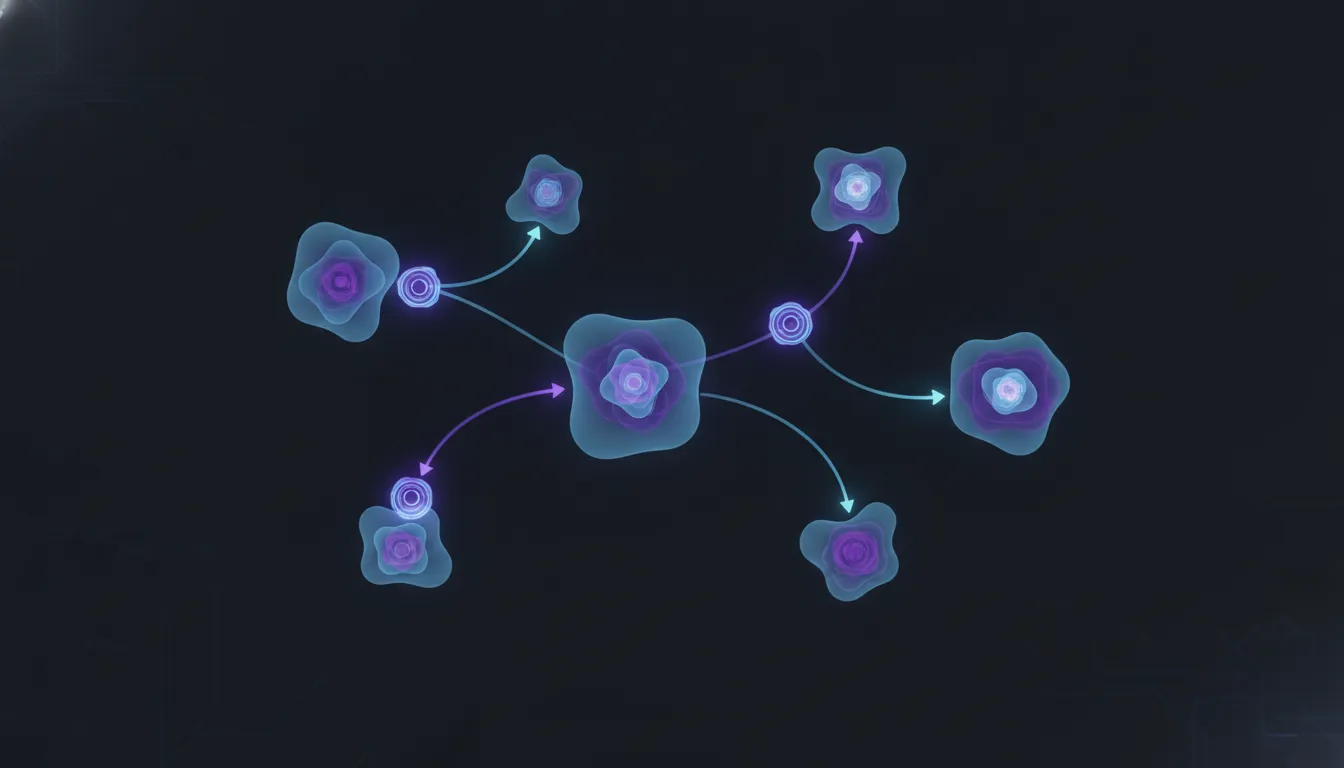
Agentic teams are a different shape. The moment two or more agents work on the same goal, handing pieces to each other, you are no longer supervising a tool. You are running a small organisation, and the interesting failures move from inside one agent to the space between them. That space is where most of the surprises live, and almost nobody warns you about it before you are in it.
Four things, in roughly the order they bite.
Hand-offs lose context. Agent A finishes, agent B starts, and the thing A knew that never made it into the hand-off is gone. B redoes discovery, or worse, proceeds on a wrong assumption A had already ruled out. The gap is invisible until the output is wrong for a reason nobody can reconstruct.
Work duplicates and conflicts. Two agents pick up overlapping slices of the same goal. Best case they waste tokens doing the same thing twice. Worst case they both write to the same place and the second quietly clobbers the first.
Approvals cascade. With one agent, a human approves one risky action. With a team, a single request can fan out into a dozen downstream actions across several agents, and the person approving the first one has no idea what they are really signing off.
Nobody can answer who did what. This is the one that matters when something goes wrong. The output is bad, or a change landed that should not have, and the honest answer to "which agent did that, and on whose authority" is a shrug and a scroll through logs that were never designed to answer it.
The instinct is to fix this with better prompts: tell each agent its role, tell it to hand off cleanly, tell it not to step on the others. Prompts help, but they are requests, not guarantees. An agent that is asked to stay in its lane will usually stay in its lane, and the one time it does not is exactly the time you needed it to.
The other instinct is a shared log. But a log written by the agents, for humans to read later, records what each agent believed it did. It does not enforce roles, it does not bind an approval to the actions it actually authorised, and it does not give you an actor you can trust over what the agent claims about itself. It is a diary, not an audit trail.
Three properties, and they are structural, not prompt-deep.
Defined roles and hand-offs, at the orchestration layer. Each agent has a job and a boundary the system enforces, and work moves between them on explicit hand-offs rather than by agents guessing what to pick up. This is what /features/agentic-teams and /solutions/orchestration are for: the team has a shape the runtime holds, not just a shape you asked for.
An identity per agent that the caller cannot fake. When an action runs, the record says which agent ran it, from a signed claim the server trusts over anything the agent asserts. Give five agents the same role and you can still tell which one acted. Without this, a team is a crowd.
Evidence, not a diary. Every action, hand-off and approval is witnessed into a record the agents cannot rewrite after the fact. "Which agent did that, under whose authority" stops being a shrug and becomes a lookup, one you can hand to someone who was not in the room.
The honest limit: none of this makes a team of agents safe to point at your production systems and walk away. Roles reduce collisions, they do not remove judgement. Evidence tells you what happened, it does not stop a bad action mid-flight unless a gate is in the path. The goal with agentic teams is the same as with one agent, only harder: not zero risk, but risk you can see, bound, and account for, across more than one actor at once.
So before you scale from one agent to a team, ask the question that predicts most of the pain: when this team does something you did not expect, will you be able to say which agent did it, what it was allowed to do, and who authorised the chain? If the answer is a shrug, the team is not ready, however good the individual agents are. This is one piece of a larger picture of how agentic AI has to work when more than one agent is acting on your behalf and every action still has to be accountable to someone.