AI agentsAI agentsKnowledge graphMemory
Why an AI agent needs a knowledge graph, not a chat log
Adam Cowles2026-09-21T08:00:00.000Z4 min read
 Get started
Reason
AgentsQuoxMindAgentic TeamsMirrorQuoxLensRemember
QuoxMemoryBrain2CompoundingQuoxPlanCodebase MirrorAct
QuoxFlowQuoxEngineQuoxAgentQuoxChatAutonomyRun
EnterpriseOrganisationsPowers & ToolsmithQlusterQuoxBastionInterfaces
QuoxMCPQuoxCLIQuoxTerminalQuox ConsoleQuoxBoxGovern
HITL ApprovalsQuox SecurityAgent HonestyQuoxVaultAI GovernanceAgentic AIProve
For AuditorsVerifiable AI OpsLoggingQuoxSEOEU AI ActCompliance SuiteChannels
Matrix RoomsDiscord ProTelegram ProQuoxSignalCoreCommsAll products A-ZBuild
QuoxProofDeveloper KitPlugin SDKBring your tool to QuoxQuoxpertQuoxSkillsQlarityShip and sell
Build and sellBrowse MarketplaceDownloadsProtocolsDev Suite
Dev ServersQuoxBuildQuoxSlotsShared Skills + RulesDev workflow
RepoBrainGripeTriageFixLoopProofLoopDoneEngineAll products A-ZGet started
OverviewArchitectureProtocols
AEEAOCLVOLTWARDReference
GlossaryAPI ReferencePlugin SDKDockerAll products A-ZA chat log remembers that a conversation happened. A knowledge graph remembers what was true at the end of it. For an agent that has to act tomorrow on what it learned today, only one of those is memory.
Give an AI agent a hard task and it will learn things along the way: that a service lives behind a particular gateway, that a customer prefers one format over another, that an approach it tried does not work. The question that decides whether the agent gets better or just gets older is simple. Where does that go?
Most answers are one of two shapes, and both quietly lose the thing you wanted to keep.
The default is the transcript. Keep the conversation, feed it back next time. It is easy and it feels like memory, but a chat log stores what was said, not what is true. Everything is there, the wrong turns next to the right ones, the superseded fact next to the one that replaced it, and nothing tells the agent which is which. Ask it what it knows about a topic and it re-reads the whole diary and hopes. As the log grows, that gets slower and less reliable, not more. A transcript accretes. It does not consolidate.
The more sophisticated answer is embeddings: chop everything into passages, store them by similarity, retrieve the closest matches to a query. This is genuinely better at recall, and it is the right tool for finding relevant text. But it still stores fragments, not structure. It does not know that two chunks describe the same entity, that one fact supersedes another, or that a belief came from a source you trust versus one you do not. You get back a pile of plausibly-related passages and the agent has to re-derive the connections every single time. It is recall without a model of what is being recalled.
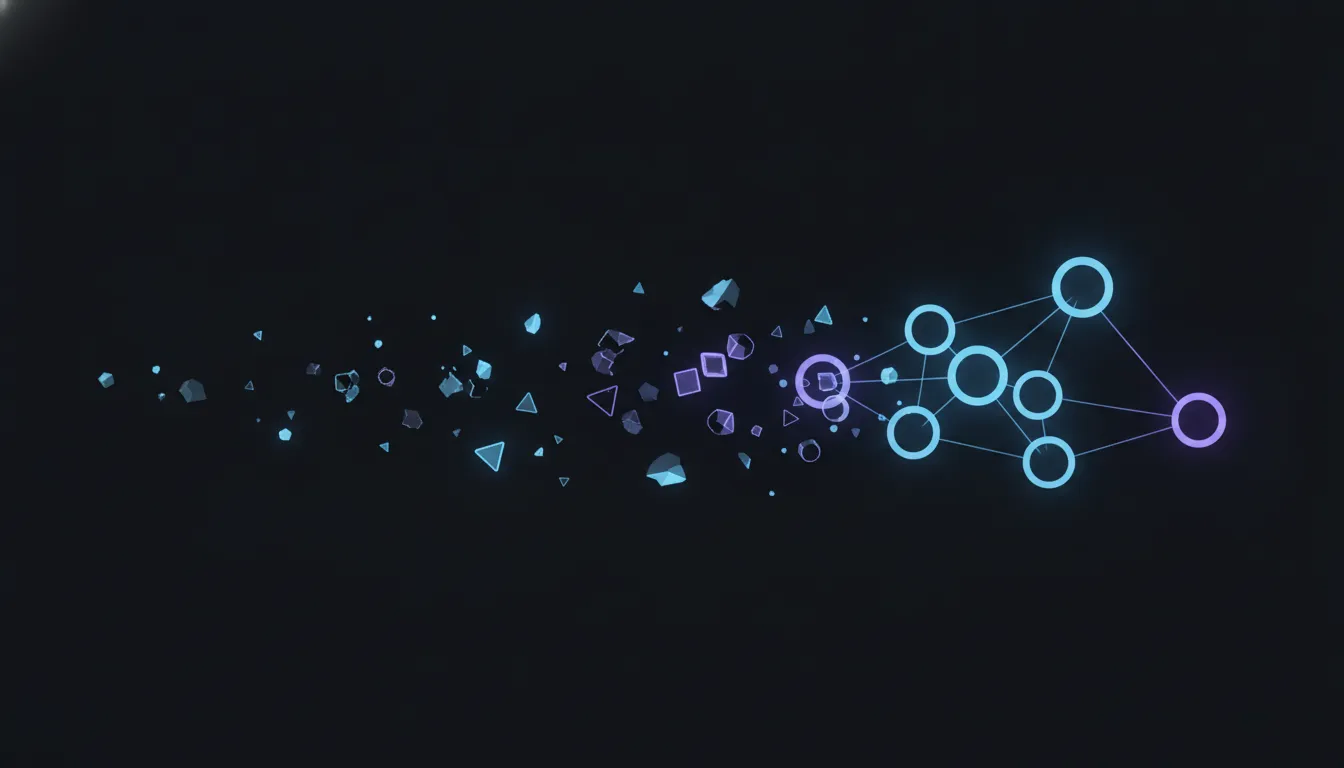
A knowledge graph stores entities and the relationships between them, and that changes what memory can do. The same fact learned twice consolidates into one node instead of two loose copies. A newer belief can supersede an older one rather than sitting beside it. Every node can carry where it came from, so a claim is citable and a provenance is checkable. And the whole thing can be scoped, so what the organisation knows is separable from what one agent picked up.
That is the difference between an agent that accumulates and one that merely accrues. Accrual is a bigger pile. Accumulation is a better model of the world, and it is the second one you want an agent acting on.
Brain2 is Quox's version: a self-feeding, governed knowledge graph, self-hosted. You connect sources once and it keeps indexing and consolidating them on its own into weighted, cited beliefs. Every agent on the platform can search it and cite it, and every note is scoped, provenanced and tamper-evident, so an answer can be traced to what it was built from. It is the persistent memory the rest of the platform reasons from, not a chat log bolted to the side.
The honest limit: a knowledge graph is a better substrate for memory, not a substitute for judgement. It makes what an agent knows structured, current and checkable. It does not decide what to do with that knowledge, and a graph fed bad sources consolidates bad beliefs faster, not slower. Provenance is what saves you there: when a belief is wrong, you can trace it to its source and cut it, which a chat log never lets you do cleanly.
So the test for AI agent memory is not "can it recall what was said". A transcript passes that and still leaves the agent starting most tasks half-blind. The test is whether, when the agent needs to act, it can get what it actually knows: consolidated, current, and traceable to where it came from. That is a knowledge graph's job, and it is why the interesting agent-memory work is moving from storing conversations to building one. It is one piece of how agentic AI stops starting cold every time.